
How We Teach
How our guitar lessons are structured
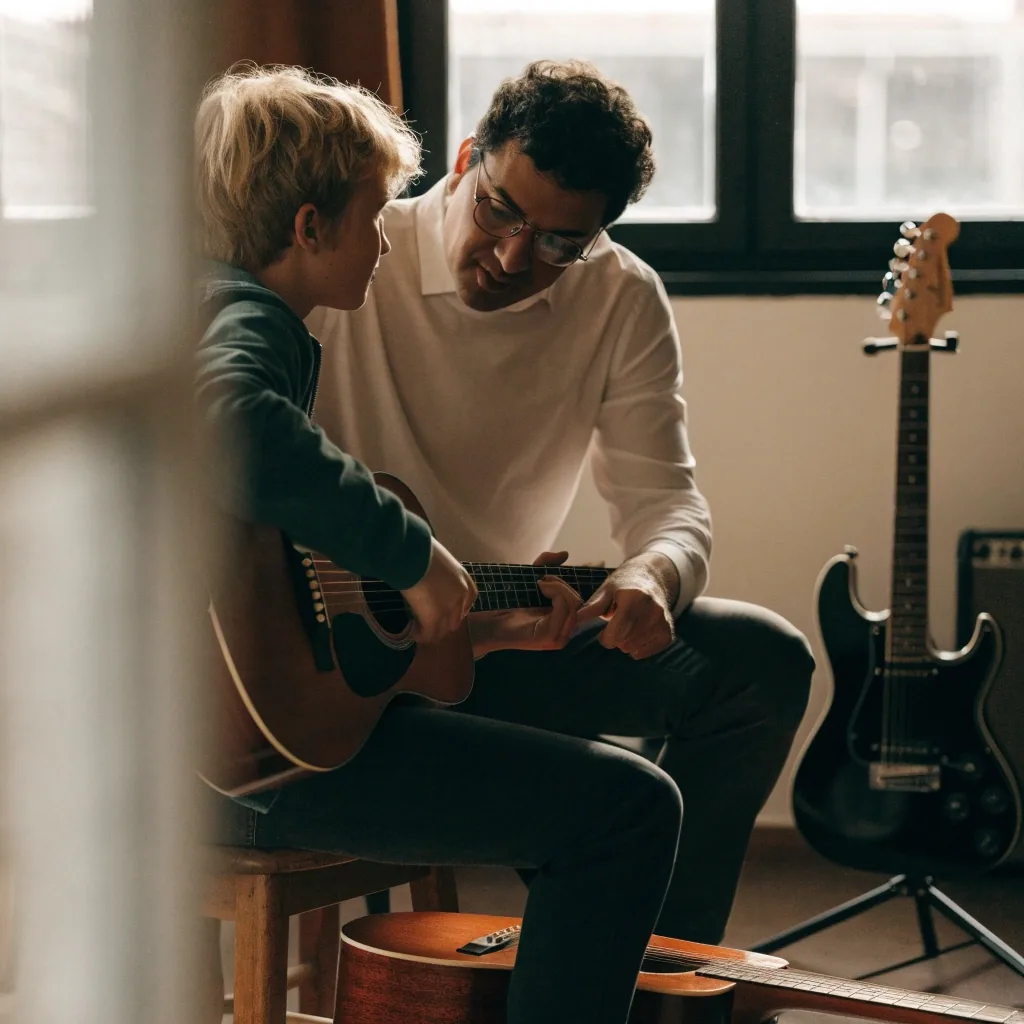
A guitar lesson can be twenty minutes of playing and forty of talking, or the reverse, and the difference shows up in your practice the following week. We keep lessons practical, one-to-one, and aimed at something you can hear improving.
This page explains what happens in a typical session, how practice work gets set, and how progress is reviewed over a term — written for anyone deciding whether our approach suits how they want to learn.
You leave every lesson knowing exactly what to work on next, and roughly how long it should take.
The shape of a typical lesson
Most lessons follow a loose pattern: a short warm-up, a review of what you practised, then the new material. It is not rigid. If a chord change that was fine last week has fallen apart, we deal with that before adding anything.
The final few minutes go on setting the next week's practice, so you leave with something written down rather than a vague sense of what to do at home.
-
Warm-up
A couple of minutes on your fretting hand, usually on a scale, an exercise or a song you already know. It settles the hand before anything new lands on it.
-
Review of last week's practice
You play the target we agreed. We listen for the thing it was meant to fix, and we say plainly what has stuck and what has not.
-
New material
One new idea, chord shape, riff or piece of theory at a time, played until it is roughly under control in the room. We would rather cover one thing properly than three badly.
-
Next week's target
The last few minutes set specific practice work, with a rough sense of how long it should take and what "done" looks like.
Timing shifts. Beginners and anyone returning after a long break often spend more of the hour on the first two blocks for the first few weeks, and that is deliberate.
Starting point
Getting the setup right first
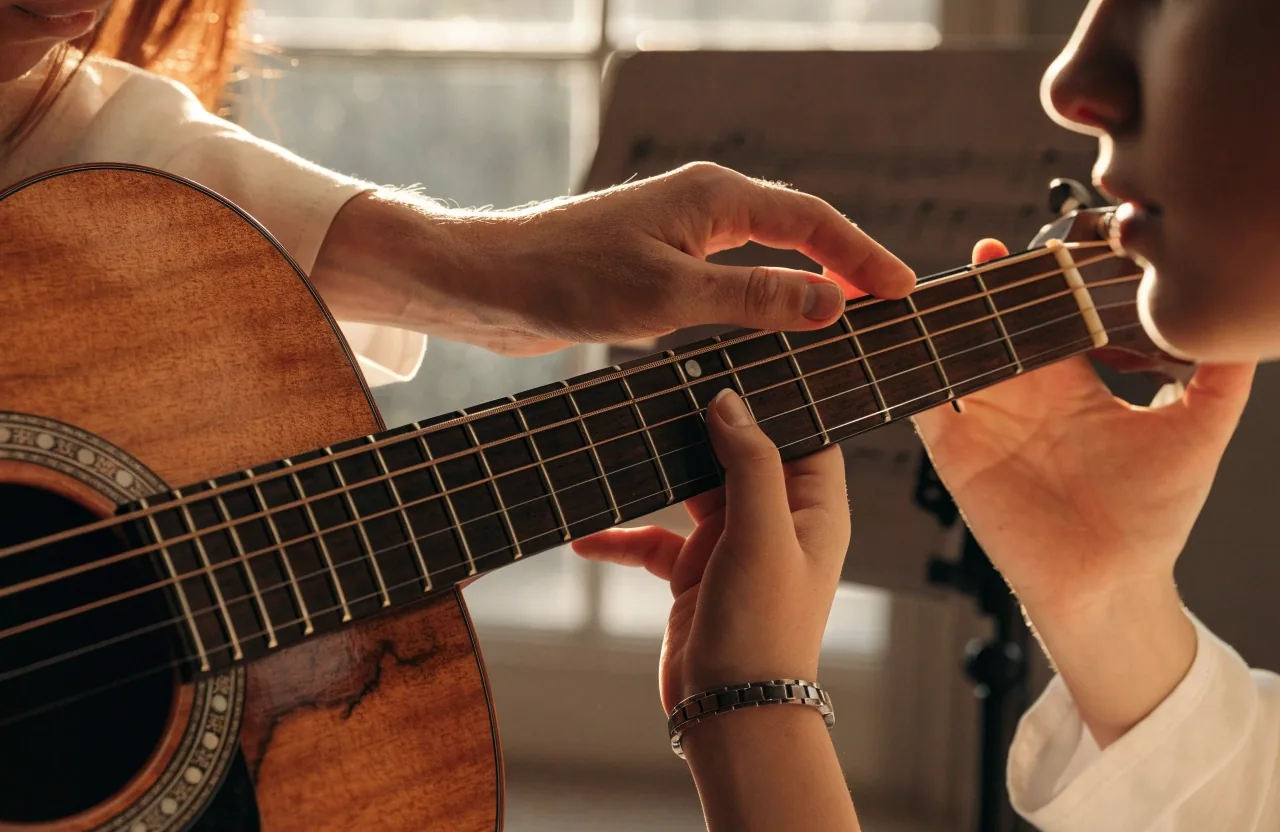
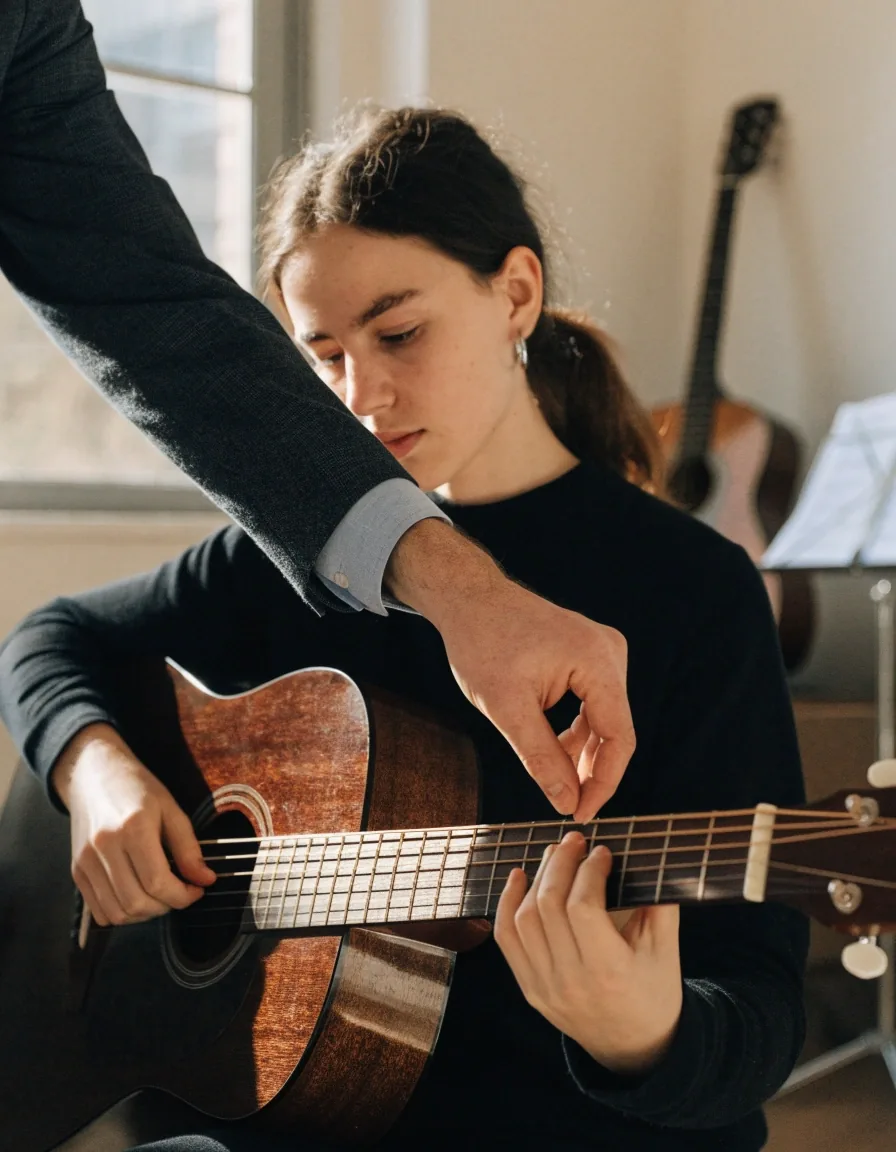
Before chord shapes or songs, we check how you are holding the instrument. Guitar is physically awkward at first, and most beginner problems trace back to posture, thumb position or too much fretting pressure.
This stage is quick for some learners and takes a few weeks for others. Spending time here is faster overall than pushing forward and correcting buzzing chords for months afterwards.
- Posture and strap length
- Where the guitar sits changes how much reach your fretting hand actually has.
- Thumb position
- A thumb creeping over the top makes barre chords and stretches far harder than they need to be.
- Fretting pressure
- Gripping harder usually sounds worse and tires the hand out sooner. We aim for the least pressure that rings clean.
Practice targets, not practice hours
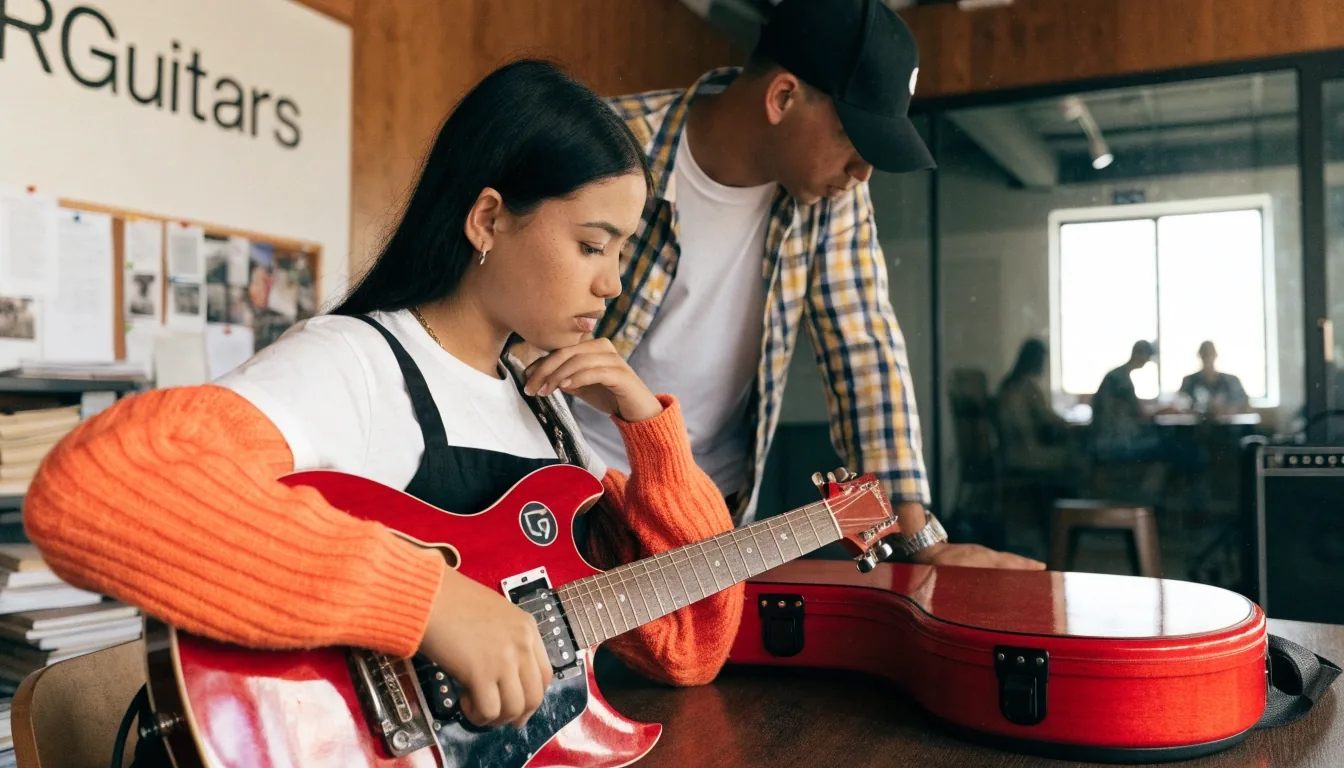
We set specific targets rather than telling you to practise for thirty minutes. Something like twenty clean changes between G and C at a tempo you can hold gives you a measurable thing to do and a clear point to stop.
That approach matters because progress comes from repetition of correct movement. Long sessions where your hand gets tired and the chords get sloppy do not build much. Short, focused blocks do.
Something countable
A target you can count — changes per minute, clean repetitions of a bar, or a tempo you can hold — is easier to sit down and do than an instruction to spend half an hour on guitar.
Short and regular
Fifteen focused minutes on four or five days usually beats one long weekend session, because the hand keeps meeting the same movement while it is still fresh.
A clear stopping point
Because each target has a finish line, you know when you are done for the day. That is easier to keep up than an open-ended hour you feel you should be putting in.
Rhythm and playing in time
Rhythm is the most common weak point in self-taught players, and it is usually invisible to them until someone points it out. Playing along with a metronome or a recording exposes timing issues quickly.
We work on this early, even at beginner level. A player with three chords and solid timing sounds better than one with ten chords who speeds up and slows down.
How we test it
Play the same chord sequence against a steady click at a tempo you can hold comfortably. Then nudge it up slightly. Most people hear their own timing drift within a few bars.
Reading, tabs and theory
We teach notation and tab according to what you need. Classical repertoire needs notation. Most rock and pop learners find tab faster. Theory gets introduced once your hands have something to attach it to, which is usually more effective than starting with a key-signature chart.
You will learn the notes on the fretboard, how chords are built, and why certain progressions work. Not as a separate subject, but as something that answers a question you have already run into in a song you are trying to play.
- Notation Standard for classical pieces and sight-reading work, introduced when the repertoire calls for it.
- Tab Often quicker for rock, pop and blues learners who mostly want to play songs.
- Theory Fretboard notes, chord construction and progressions, brought in to explain something you are already playing.
How progress gets reviewed
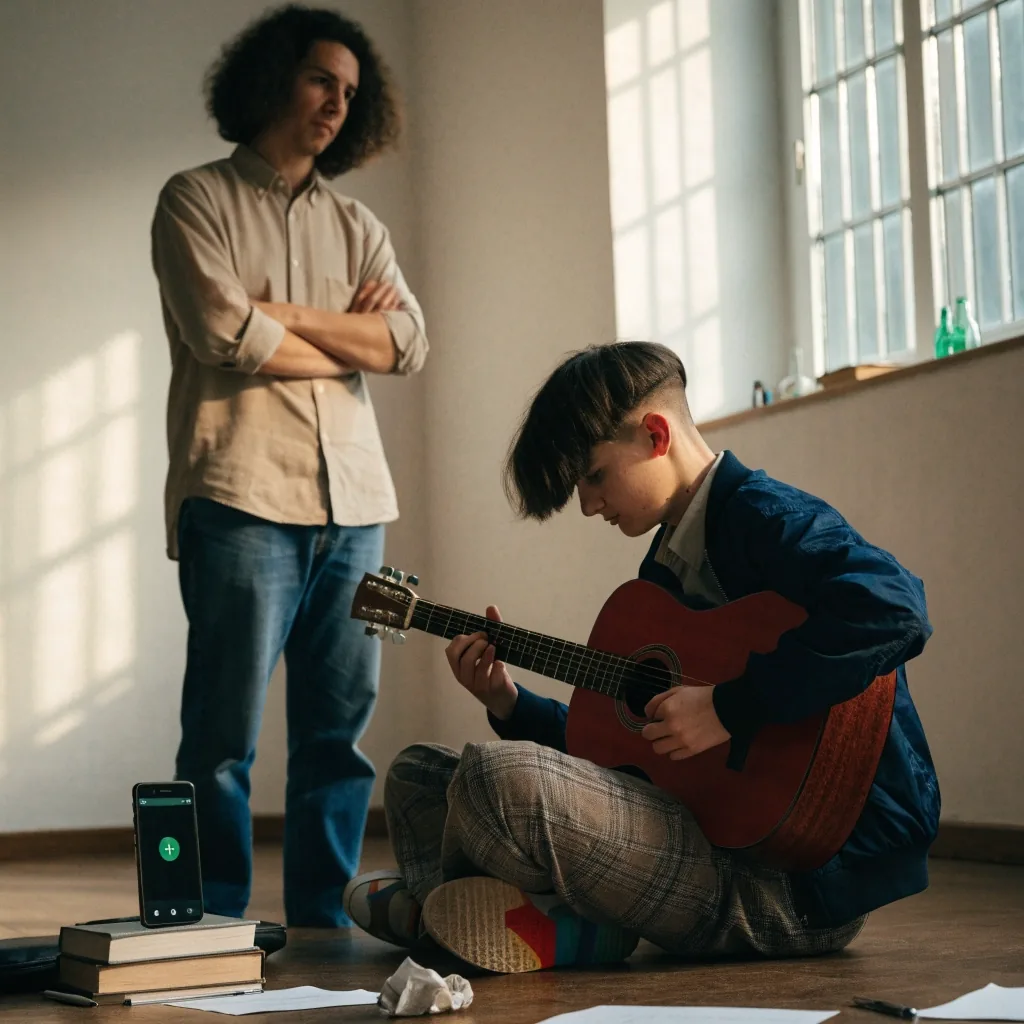
Every few months we pause and look at where you have got to. That might mean recording yourself playing something you could not play at the start, comparing your timing against a metronome, or simply listing the songs you can now perform.
Tangible markers are useful because week-to-week progress is hard to feel. A recording from three months ago usually settles any doubt about whether lessons are working.
When you are not practising enough
It happens, and it is worth naming. If practice slips for a few weeks, lessons can start to feel like the same session on repeat. The right response is not guilt, it is adjusting the plan to something realistic for your current week.
Sometimes that means a shorter practice target. Sometimes it means picking different material. Occasionally it means pausing lessons until life settles, and we will say so if that seems the honest option.
Sessions for adults returning to guitar
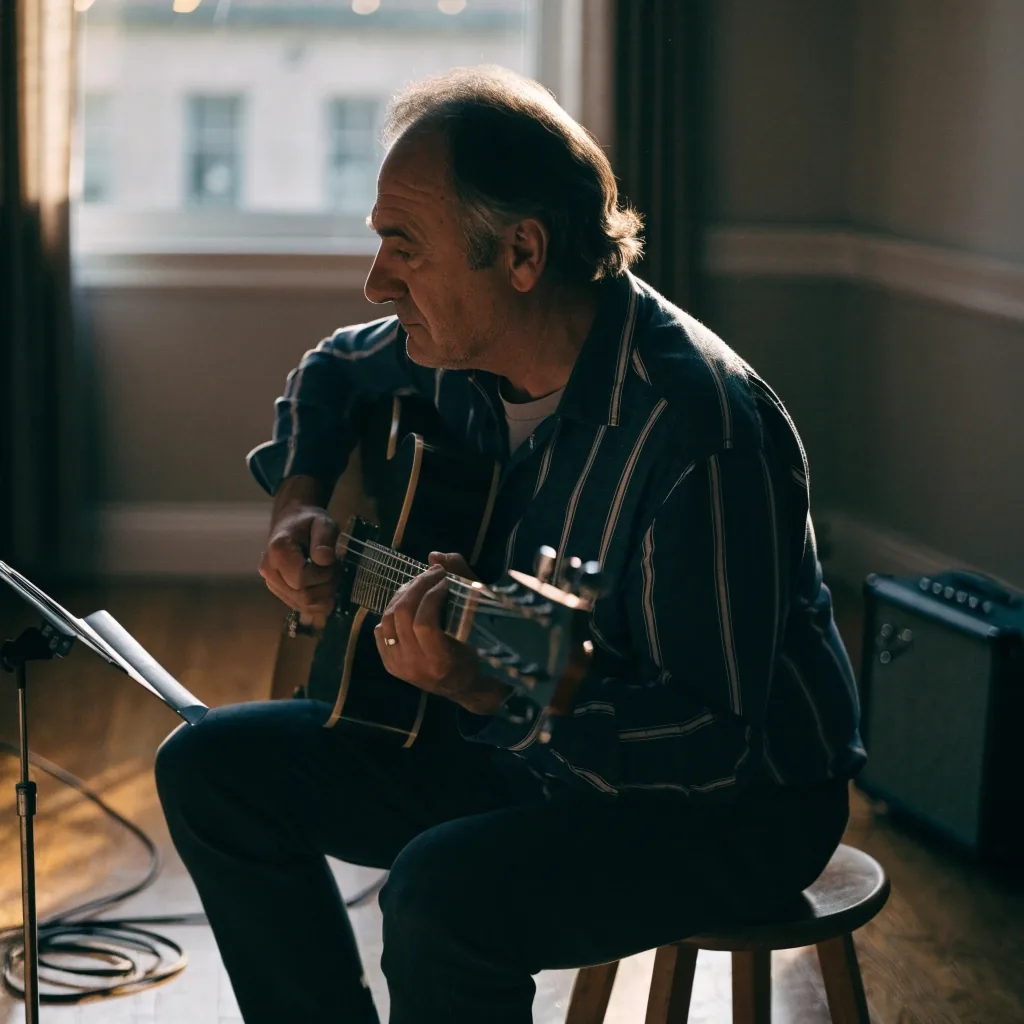
A large share of our learners are adults who played in their teens and stopped. They tend to arrive with strong expectations about what they should still be able to do, and useful fragments of technique that were never properly finished.
The work is usually about filling gaps rather than starting over. Barre chords, timing and reading tend to be the missing pieces, and they come back faster than people fear.
Working with younger learners
Children and teenagers need a different rhythm. Sessions are shorter, songs need to be ones they actually want to play, and practice needs to be something a parent can help monitor without turning into a nightly argument.
We will be direct with parents about what to expect in the first term. Rapid visible progress in the first few weeks is unlikely; staying with it is what produces the result over a year.
Why one-to-one rather than group lessons
One-to-one lessons mean the entire hour is aimed at your hands, your timing and your goals. Group lessons have social advantages and can be cheaper per hour, but the pace is set by the room.
For beginners, the individual attention matters most. For intermediate players stuck on a specific technical problem, it matters even more, because a general class will not diagnose what is wrong with your picking hand.
- Pace Set by what you can play this week, not by the slowest or fastest person in a room of eight.
- Material Chosen for the music you actually want to play, within reason. Beginners still start with fundamentals, but the songs are yours.
- Diagnosis A single pair of eyes on your hands catches the small habits that quietly block progress for months.
- Practice plan Written for one learner, so the targets are actually achievable in your week rather than the average week.
What we expect from you
Turn up roughly on time, bring your guitar in tune, and tell us if something is not working. That last one matters. A learner who quietly struggles with the material for three weeks is losing time that a single sentence would recover.
Beyond that, there is not much. You do not need to be naturally musical, and you do not need to have played before.
Before you enquire
Questions we get asked
If your question is not here, ask it in the enquiry and we will answer before you commit to anything.
Read the full FAQ page
How much of a lesson is playing versus talking?
Most of it should be playing. We aim for roughly ten minutes of review and discussion and the rest on the instrument, though it shifts depending on what you are working on.
Do you set homework?
We set specific practice targets each week, with a rough sense of how long they should take. Nothing is formally marked, but we will review them at the start of the following lesson.
What if I do not get on with the tutor's style?
Say so early rather than letting lessons fade out. We would rather adjust the approach, or point you towards a different teacher, than have you paying for sessions that are not landing.
Can I record the lesson?
Yes, recording is fine and often useful for practice. Ask before filming and we will set the camera angle so the demonstration is actually visible.
If this sounds like how you want to learn, get in touch
Send a short enquiry with what you play now, what you would like to be able to play, and roughly when you are free. We will reply with a suggested starting point and the next available slots, and you can ask anything before you decide.
Lessons run from our Brighton studio, seven days a week during opening hours. No prices are published here; we confirm details directly when we reply.
Prefer to speak first? Call +44 1273 659091 or email [email protected] during studio hours, Monday to Friday 9:00 AM to 6:00 PM, Saturday 10:00 AM to 4:00 PM.