

One-to-one guitar tuition · Brighton studio and live online · United Kingdom
Guitar lessons built around how you learn
Most people who get in touch have tried learning guitar before, or they've been meaning to start for years. Fretwork teaches beginner guitar lessons, one-to-one guitar lessons and live online guitar lessons — and the format is chosen to fit the person, not the other way round.
No prices are published here. Tell us what you want to play and roughly when you're free — we read every enquiry and reply with a suggested format and the practical details.
How it works here
No prices, no account, no commitment
We don't publish lesson prices on this site. Instead, you send a lesson enquiry describing your goals, your preferred format and when you're usually free, and we come back to you with a plan and the practical details. That conversation takes a few minutes and saves a lot of back-and-forth later.
Enquiries are read by the tutor who would teach you, not routed through a matching system. If the fit doesn't look right, we'll say so and suggest a better route.
Tell us what you want to playWhat a first lesson actually looks like
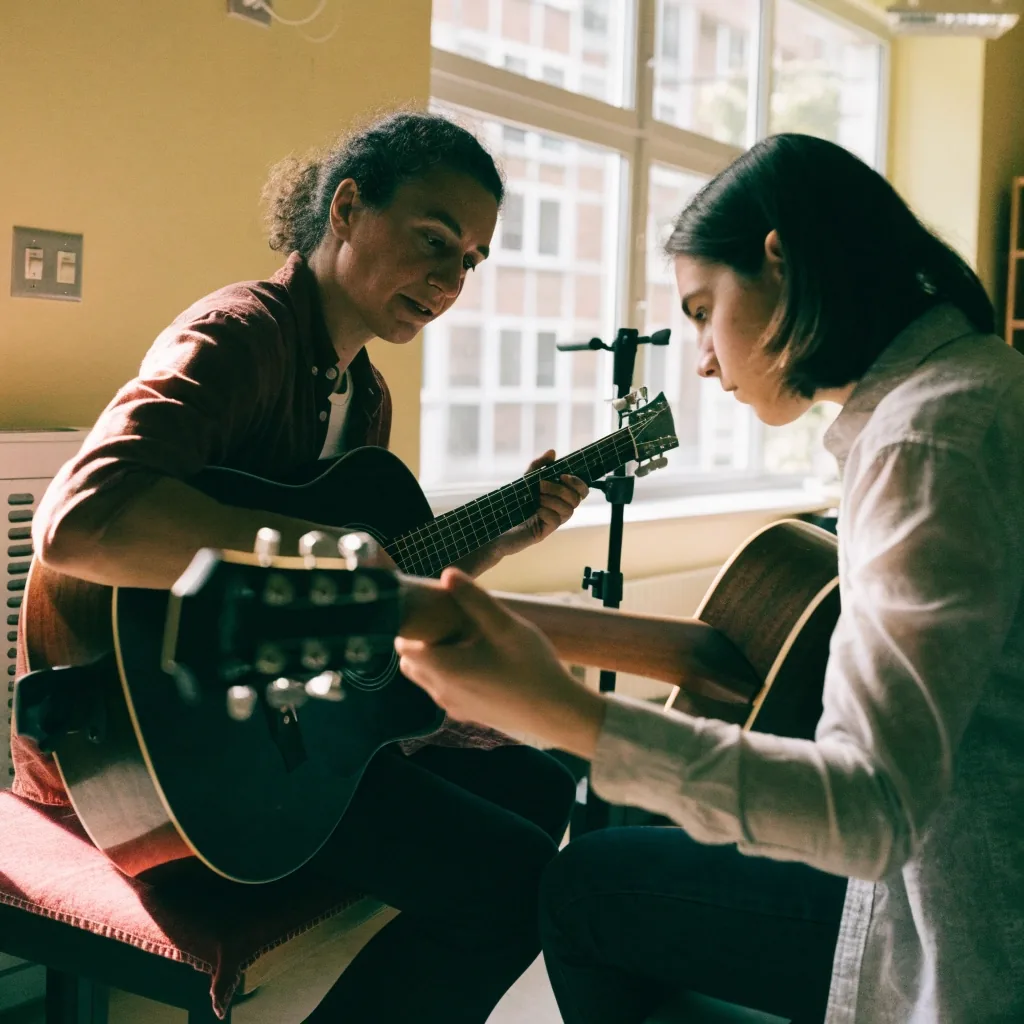
The first session is a working lesson, not an audition. We usually spend the opening minutes finding out what you want to play, then pick up the instrument and start.
For a complete beginner that might mean holding the guitar properly, getting a clean sound from a single string, and learning two chords you can move between. For someone returning after a gap, we'll test what's still there and where the gaps are.
You don't need to prepare anything. Bring whatever guitar you have, a spare set of strings if you own them, and a rough idea of one song you'd like to be able to play. If you'd rather just turn up and be taught, that works too.
Bring with you
- Whatever guitar you already own
- A spare set of strings, if you have them
- One song you'd like to be able to play
Leave with
- Two chords you can change between
- A clean single-note sound
- One small, specific practice target
Technique and theory travel well over video. Hand position and tone are easier in the room.
Both formats run one-to-one with the same tutor and the same structure. Choose between them on constraints, not on quality.
Face-to-face lessons in the studio
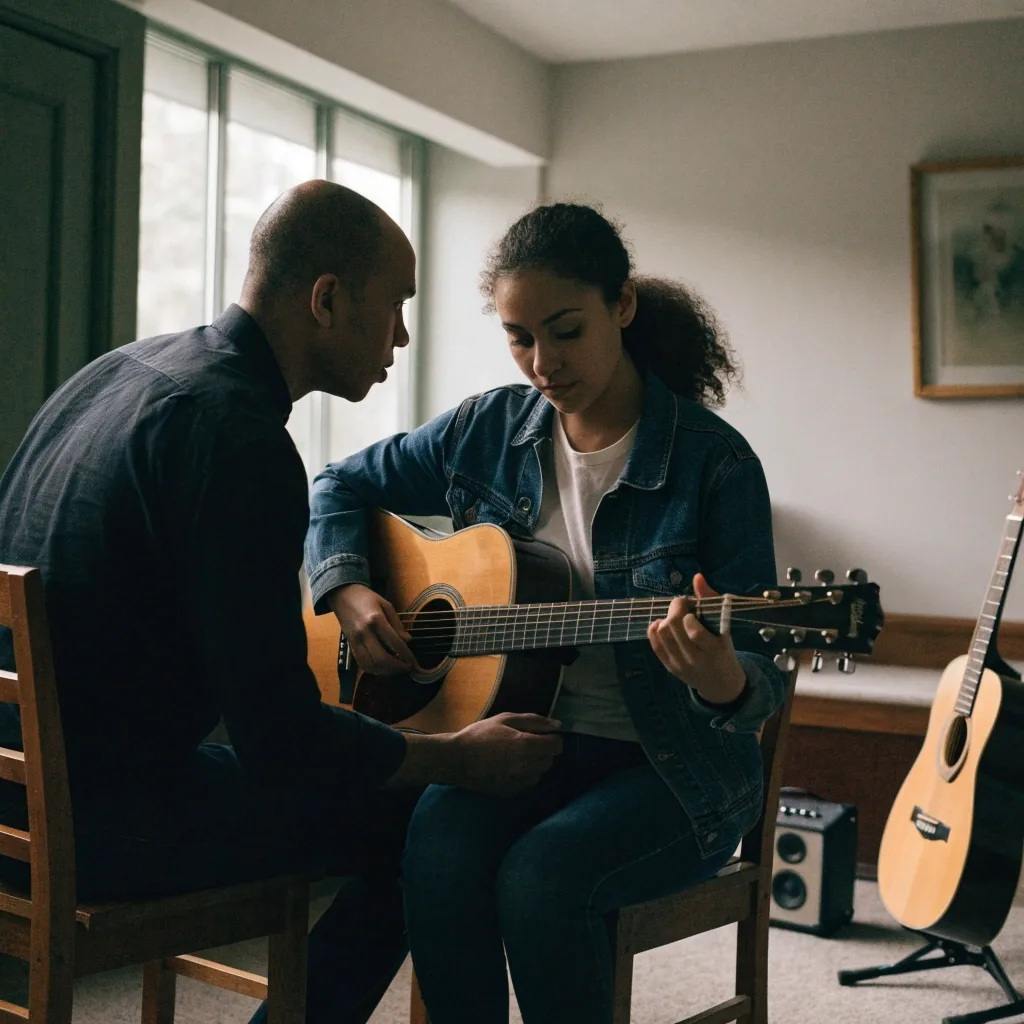
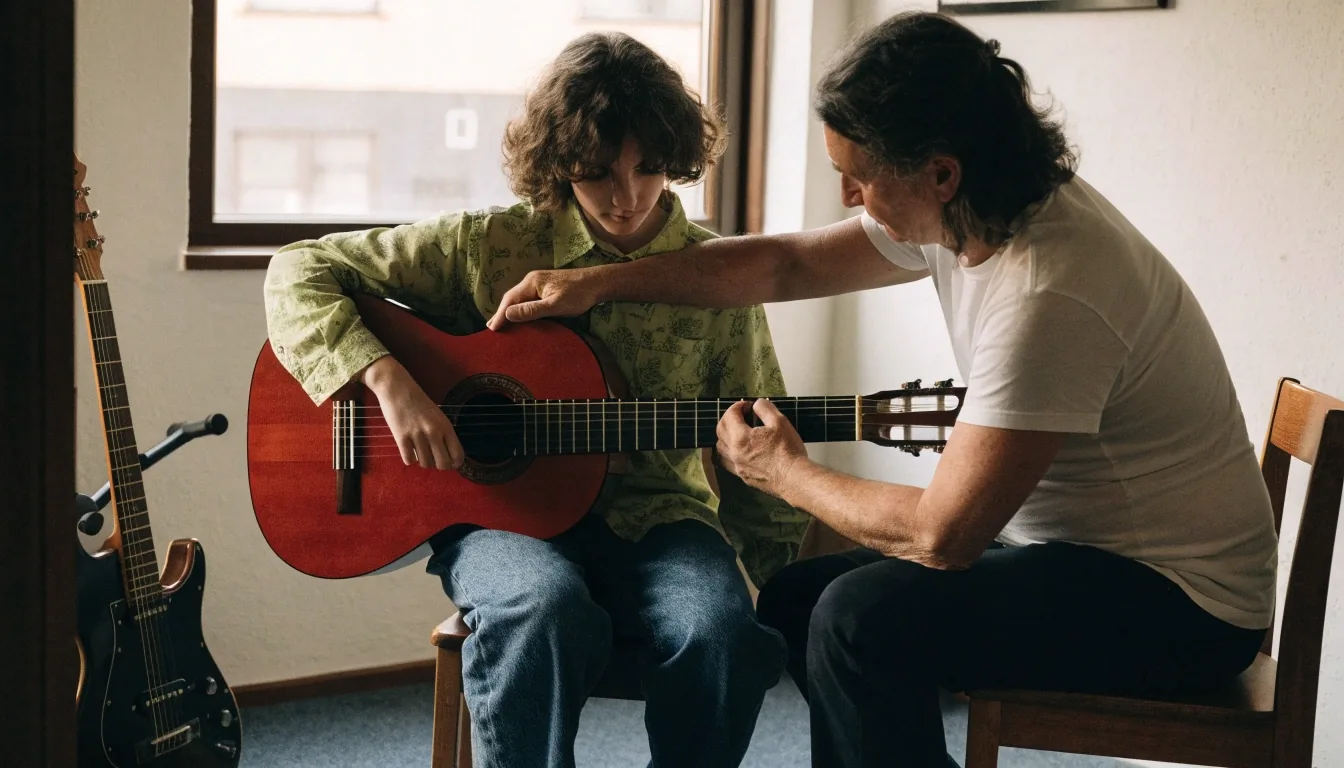
Face-to-face guitar lessons suit people who want hands-on correction. A tutor can see your fretting hand from an angle you can't see yourself, reposition a thumb, or catch the tension in your shoulder that's making a chord buzz. That kind of correction is hard to deliver over video.
Sessions run one-to-one by default, which means the pace is set entirely by you. If a chord change needs three weeks of slow work, that's what we do. If you're picking things up quickly, we move on. Standard sessions run for either 30 or 60 minutes, and we'll recommend one based on your level and how much material you can absorb — beginners often do better with shorter, more frequent sessions at the start.
Why learners choose it
If you have a reliable hour and a short commute, in-person wins. You can be corrected physically in the room, and the tutor can hear the instrument without a microphone compressing it.
Good to know
Studio lessons are available Monday to Friday, 9:00 AM – 6:00 PM, and Saturday, 10:00 AM – 4:00 PM.
Live online guitar lessons
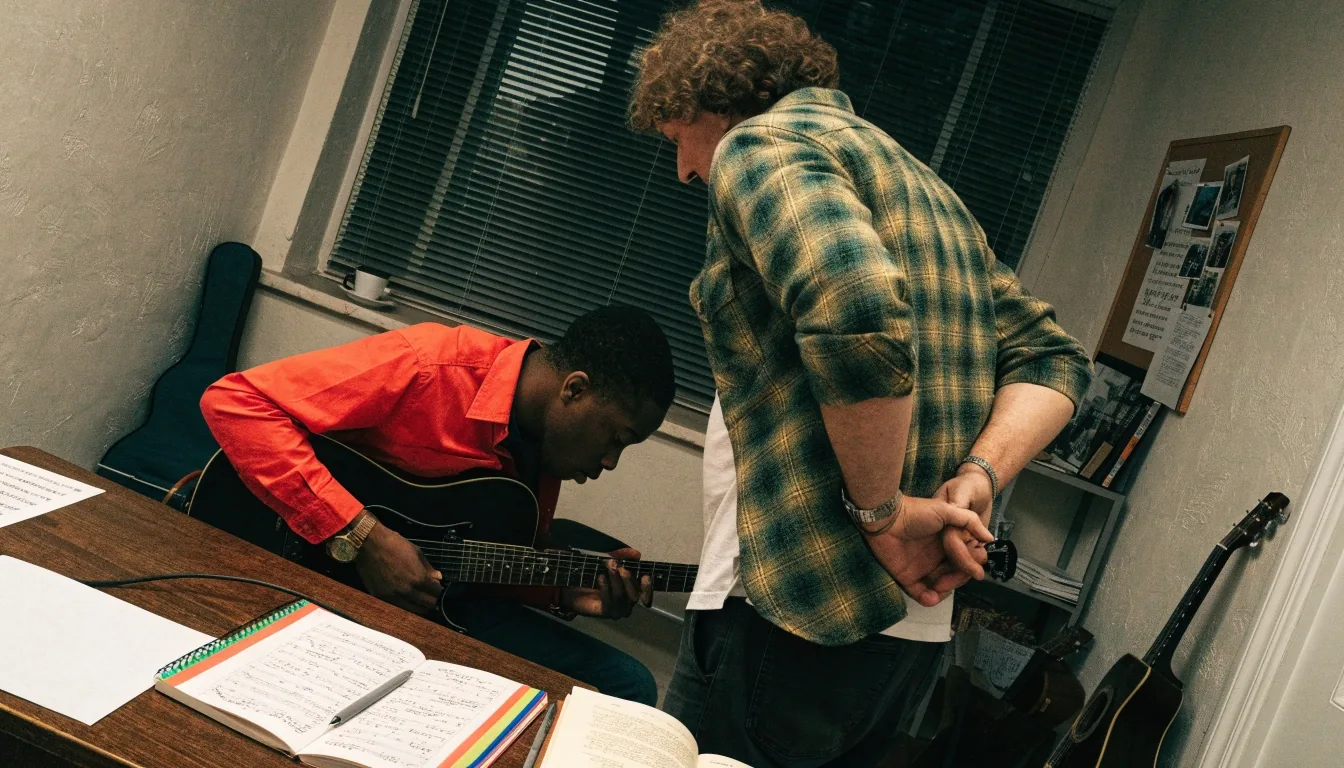
Live online guitar lessons run over video call, with the same tutor, the same one-to-one format and the same structure as an in-person session. If you've wondered whether online guitar tuition actually works, the honest answer is that it depends on what you're learning.
What online lessons do well is remove travel and scheduling friction. Learners in smaller towns, or people working shifts, often find that a regular online slot is the difference between practising weekly and not practising at all.
Works well online
- Technique and posture drills
- Chord work and rhythm
- Theory and fretboard knowledge
- Repertoire and song work
Easier in the room
- Subtle tone and amplifier settings
- Fine hand-position nuance
- Physical corrections to grip and thumb
Acoustic, electric and classical
The instrument affects everything from posture to the material we use. You don't have to commit to one — plenty of learners keep an acoustic at home and bring an electric to alternate lessons.
Acoustic
Steel strings, a fuller body and a sound most people already know. Often chosen by learners who want to strum and sing, and a good fit for open chords and rhythm work.
Typical material: strumming patterns, chord progressions, accompanying yourself.
Electric
A lighter action and a thinner neck, which many beginners find easier on the fingers. Electric players usually want riffs, tone and improvisation early.
Typical material: riffs, power chords, first scale shapes, tone settings.
Classical
A nylon-string instrument, a footstool and a reading-based approach. The technique is seated and strict, and it builds clean independence between the fingers.
Typical material: right-hand patterns, notation, graded repertoire.
Beginner lessons and what to expect
Beginner lessons are the largest part of what we do. The early weeks cover a small number of open chords, simple strumming patterns and enough rhythm to play along with a recording. We introduce reading and theory gradually, once your hands have something to attach it to.
No prior musical background is needed. Complete beginners start with posture, clean single notes and two chords, then build from there. If you've played before and want to return, we'll test what's still there and where the gaps are.
The thing that decides how fast you progress isn't talent. It's whether you practise in short, regular blocks rather than one long session the night before your lesson. Ten minutes most days beats an hour on Sunday, and we'll help you build a routine that fits your actual week.
Equipment to start
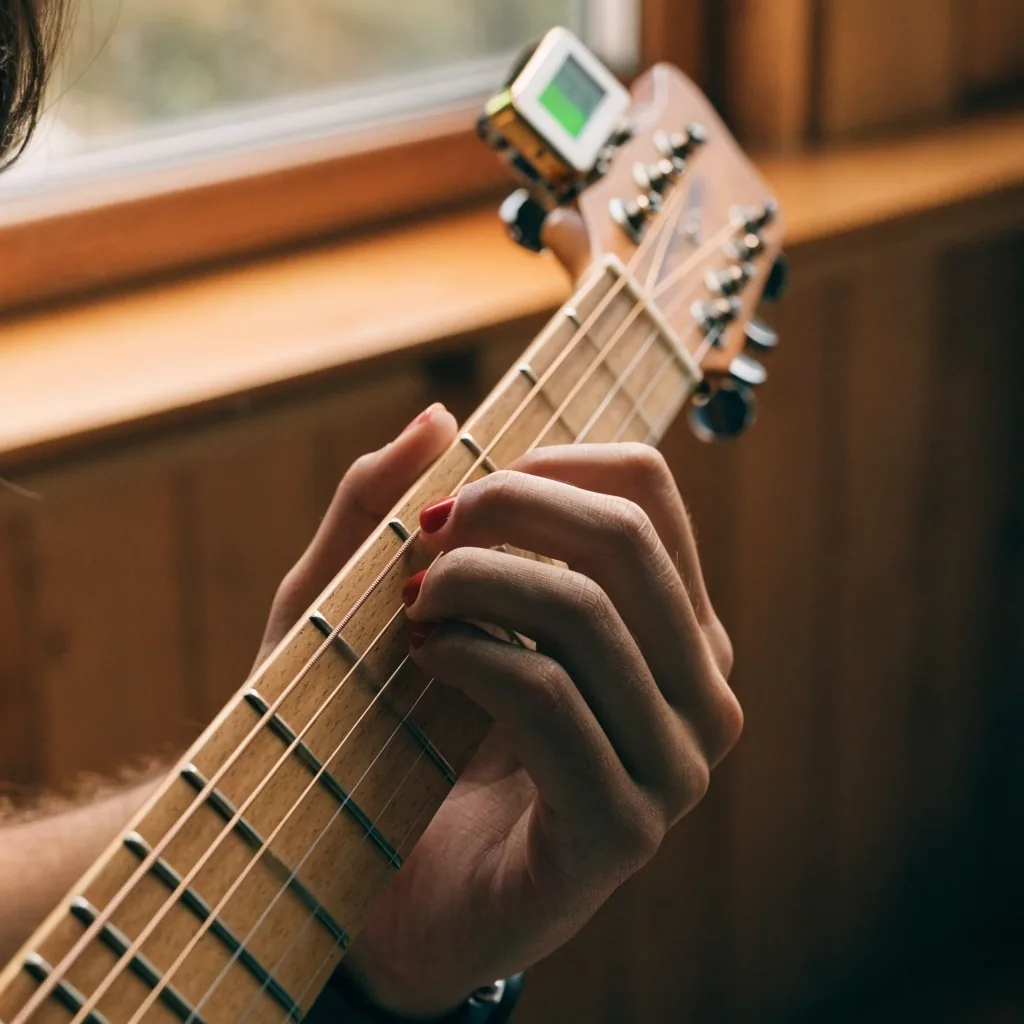
You need a playable guitar and a tuner. Clip-on tuners are cheap and more reliable than tuning by ear when you're starting out. A capo is useful within the first month if you want to sing along. If you're buying a first instrument, ask before you spend — we'd rather point you at a sensible used option in your budget than have you buy something with a warped neck that fights you every lesson.
Exam preparation and graded routes
For learners who want a structured goal, we prepare for graded guitar exams through the recognised UK board syllabuses. That means working through set pieces, scales, sight-reading and aural tests, with mock exam conditions closer to the date.
Graded routes suit some people and not others. If the exam format drains the enjoyment out of playing, we'll say so and suggest a different structure instead, such as learning a fixed set of songs to performance standard.
Graded route
Set pieces, scales, sight-reading and aural tests worked through in order, with mock conditions before the exam date.
Songs route
A fixed set of songs taken to performance standard instead — structure and progress without exam pressure.
Mixed route
Technique and repertoire first, then exam material added later once the hands have caught up.
Playing for fun
No goal beyond playing the music you like, at a pace that fits the week you actually have.
How we compare with marketplaces and video libraries
There are three broad ways to learn in the UK right now. Tutor marketplaces let you filter by location, schedule and style, and match with someone through the platform. Video libraries such as LickLibrary give you structured material to work through at your own pace. And dedicated teachers, whether a small regional school or an individual tutor, work with you directly.
Tutor marketplaces
Good for comparing a lot of tutors quickly. You book through the platform, and the tutor's attention is shared across a wide roster of students.
Best when you want to compare options before you commit to anyone.
Video libraries
Excellent for learning specific songs or techniques on your own schedule, and for going back over something as often as you like.
What it can't do is watch you play and tell you why the chord is buzzing.
A dedicated teacher
One tutor who reads your enquiry, plans your lessons and teaches you each week, so the material carries over and the correction loop is direct.
That feedback loop is the main thing live tuition provides — which is why most learners combine the two.
Where our learners come from
Enquiries arrive from across the UK, which is why the online format exists alongside studio teaching. Some learners are in cities with plenty of tutors and simply prefer a dedicated teacher over a marketplace listing. Others are in areas where the nearest guitar shop is half an hour away.
That mix shapes how we plan lessons. A learner with no local teacher needs everything explained clearly enough to work on alone. Someone local can be corrected physically in the room. Both routes lead to the same place.
Fretwork is a small UK tuition studio rather than a marketplace. Every enquiry is read by the tutor who'll teach you, and there's no matching algorithm in between. We teach one-to-one, across acoustic, electric and classical guitar, from first chords through to grade exams.
That scale is deliberate. It means we can say no to a request if we're not the right fit, and point you somewhere better. It also means lessons stay consistent week to week, which matters more than most people expect when they're deciding who to learn from.
Have a rough answer ready for three things and we can make a sensible recommendation.
What you want to play, how much time you can realistically give it each week, and whether you'd rather be in a room or on a video call. If you're not sure about any of it, say so — "complete beginner, no idea where to start" is a perfectly good enquiry.
How the enquiry process works
You fill in the lesson enquiry form with a few details: what you want to play, whether you'd prefer face-to-face or online, your experience level, and roughly when you're available. We read it and reply with a suggested format and the next available slot.
No account, no payment details, no commitment. We offer an initial session so you can see how the format works before committing to a regular slot — mention on the form that you'd like to start with a single lesson and we'll arrange it.
The studio
12 Elm Grove, Brighton BN2 3ES, United Kingdom
Monday to Friday, 9:00 AM – 6:00 PM · Saturday, 10:00 AM – 4:00 PM
[email protected] · +441273659091
Send a lesson enquiry
Tell us what you want to play and when you're usually free. We'll get back to you with a suggested format and the practical details.
Questions we get asked
If your question isn't here, put it in the enquiry form — it's the fastest way to get a straight answer.
Read the full FAQCan I learn guitar effectively through live online lessons?
Yes, for most of what beginners and intermediate players work on. Technique, chord work, theory and repertoire all translate well over video. The limitations are subtle tone and fine hand-position detail, which are easier to address in person.
Do I need my own guitar before the first lesson?
Yes, you'll need an instrument to practise on between sessions. If you haven't bought one yet, mention it in your enquiry and we'll suggest sensible options at your budget before you spend anything.
How long is a typical lesson?
Standard one-to-one sessions run for either 30 or 60 minutes, and we'll recommend one based on your level and how much material you can absorb. Beginners often do better with shorter, more frequent sessions at the start.
How much practice do I need between lessons?
Short and regular beats long and occasional. Ten to fifteen minutes most days is enough to make steady progress as a beginner. We'll set specific weekly targets so you know what to work on.
Do you teach complete beginners with no musical background?
Beginner guitar lessons are a large part of what we teach, and no prior musical experience is needed. We start with posture, clean single notes and two chords, then build from there.
How do I find out about scheduling and availability?
Send a lesson enquiry with your rough availability and preferred format. We'll reply with the slots we have open, and you can decide from there. Nothing is committed until you've seen the options.
Is there a trial lesson?
We offer an initial session so you can see how the format works before committing to a regular slot. Mention on the enquiry form that you'd like to start with a single lesson and we'll arrange it.
Next step: tell us what you want to play
A short enquiry is all it takes to get a plan back. Send your goals, your preferred format and when you're usually free, and we'll reply with the practical details — no prices published, no account, no commitment.